Solo Novel
Drama
Short
09/07/2026
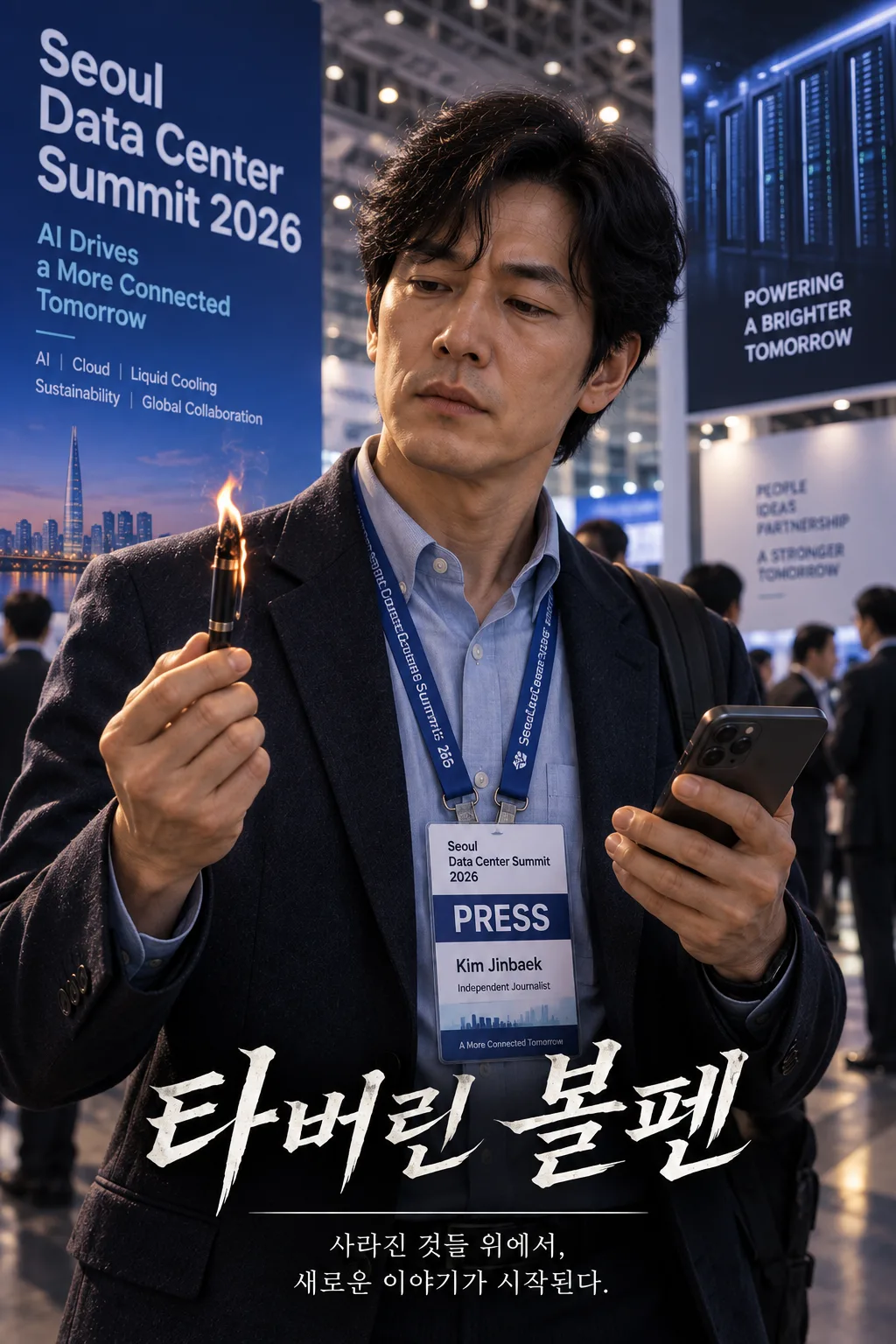
THE BURNED PEN
At his first major conference as an independent journalist, a man watches the pen in his hand mysteriously burn to ash just as he learns that the stock holding much of his savings has collapsed. Surrounded by ambitious people talking about the future, he must decide what remains when the tools, money, and identities he once depended on begin to disappear.
Solo Novel
Drama
Short
09/07/2026
타버린 볼펜
새로운 삶을 시작한 독립기자의 볼펜이 갑자기 불타버리고, 동시에 그의 주식은 폭락한다. 모든 것이 흔들리는 순간, 그는 타버린 펜 대신 휴대전화를 꺼내 자신의 첫 문장을 쓰기 시작한다.
Solo Novel
Drama
Short
08/21/2026
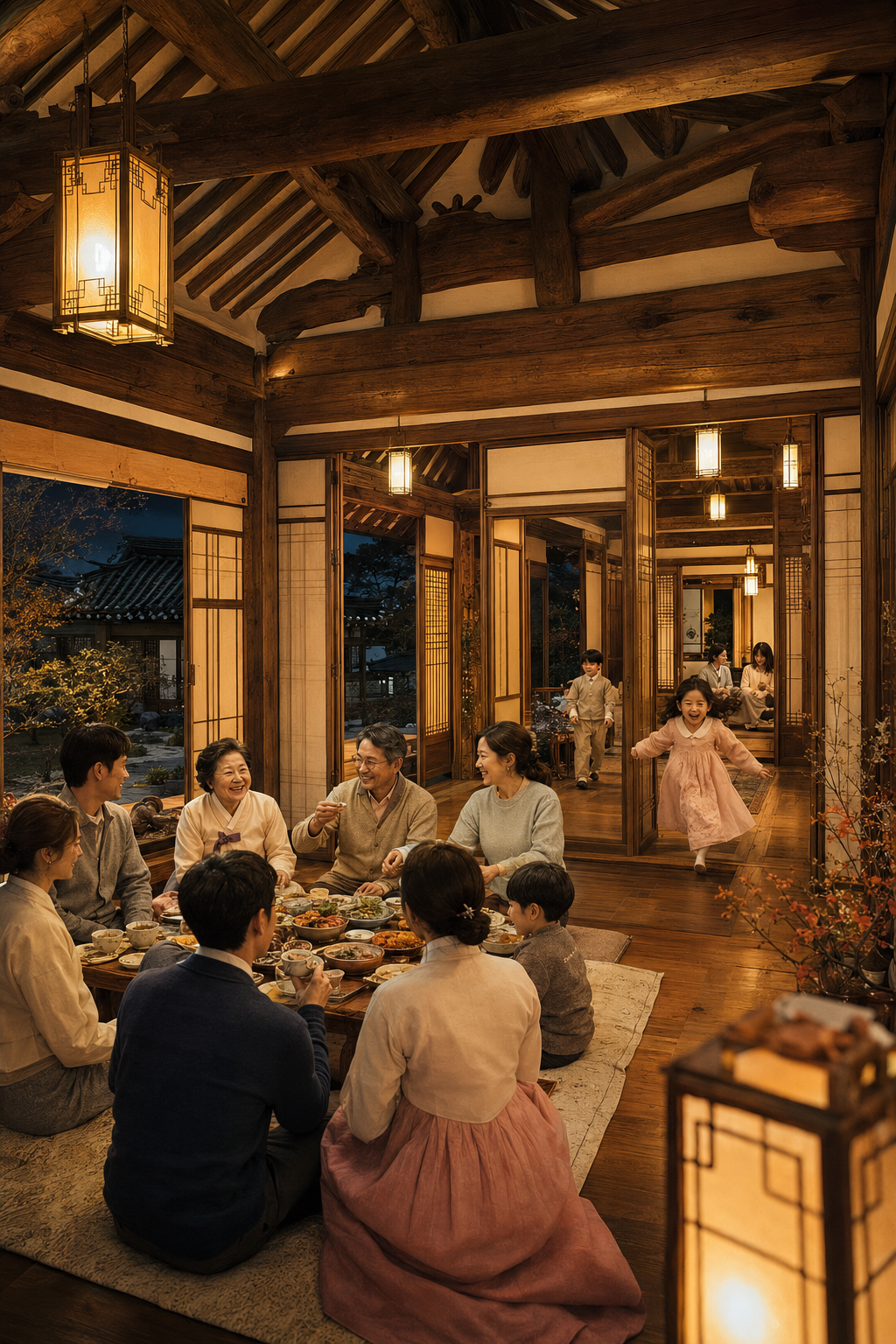
The Way to Building 11
During a peaceful holiday gathering in a house he has never seen before, a man is reunited with his late mother and younger brother. But when he and his wife leave in search of the mysterious Building 11, they find themselves climbing a staircase buried beneath waist-deep snow. Along the way, he realizes that the people we have loved do not remain behind in the past—they live within us, quietly guiding us toward the next step.
Solo Novel
Drama
Short
08/21/2026
11동으로 가는 길
이 이야기는 “죽음 이후”를 다루는 이야기가 아니라, 기억이 어떻게 우리를 이동시키는가에 대한 이야기입니다.
주인공은 명절의 큰 저택에서 이미 죽은 가족들과 자연스럽게 시간을 보냅니다. 슬픔도 경계도 없습니다. 그 장면은 현실과 꿈, 생과 사의 경계가 무너진 상태로, “가족이라는 감각”만이 남아 있는 공간입니다.
이후 그는 아내와 함께 ‘11동’이라는 알 수 없는 목적지를 향해 눈 속을 걷습니다. 그러나 중요한 것은 목적지가 아니라, 눈 속에서 발견되는 계단입니다. 그 계단은 현실의 구조가 아니라 기억과 감정이 만들어낸 이동의 방식입니다.
이 작품의 핵심은 이것입니다:
우리는 누군가를 잃는 것이 아니라, 그들을 “내 안으로 이동시키며” 계속 살아간다.
동생의 머리를 다듬는 장면, 엄마의 웃음, 눈 속 계단은 모두 상징적으로 “관계의 내면화”를 보여줍니다. 마지막에 주인공이 깨닫는 것은, 가족은 사라진 것이 아니라 이미 자신과 함께 걷고 있다는 사실입니다.
이 이야기는 상실을 슬픔이 아니라 동행의 형태로 재해석하는 서사입니다.
Solo Novel
Literary
Short
08/15/2026
아직 이쪽에서
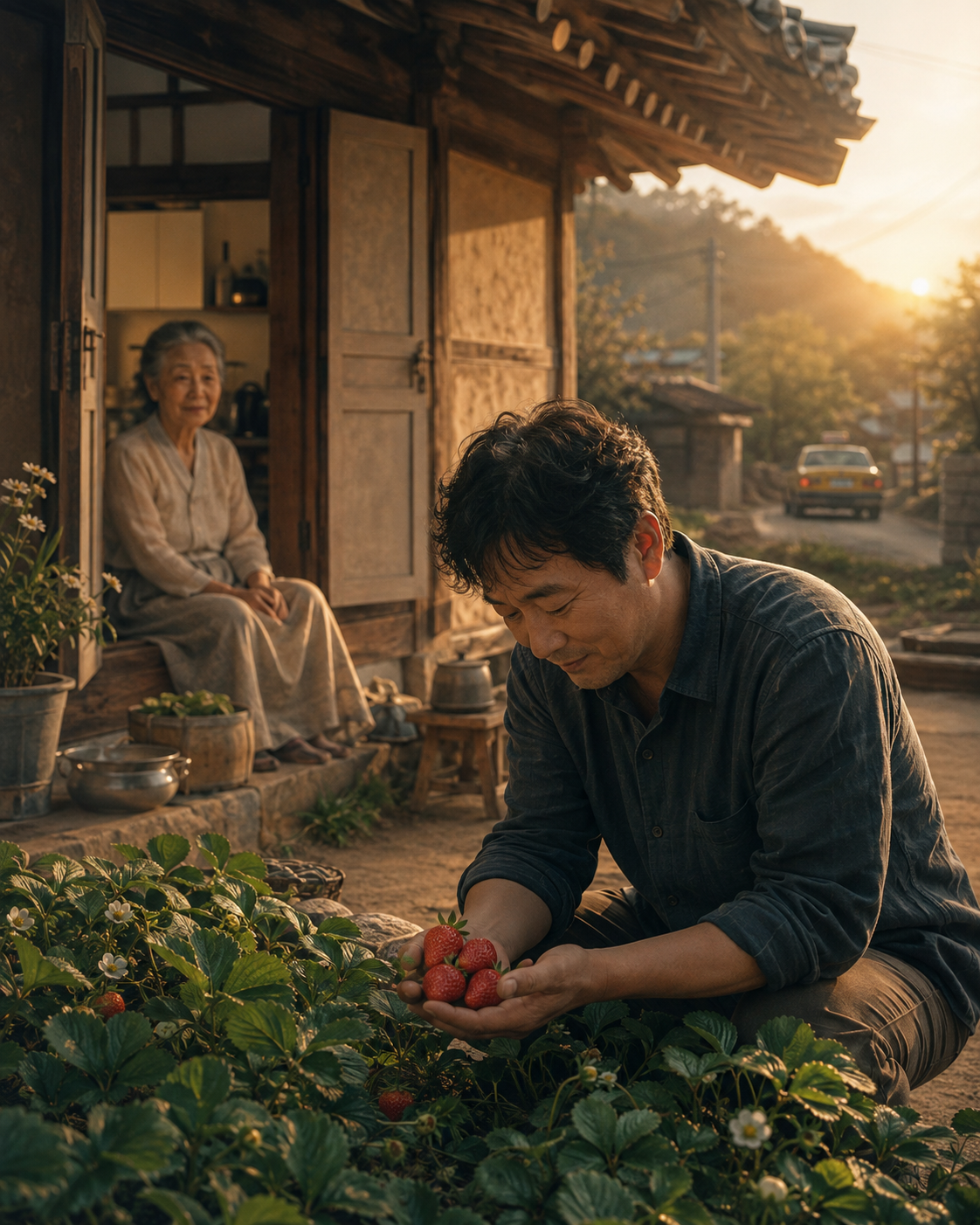
카뮈와 석가모니가 묘하게 한 지점에서 만날 수 있어요. 카뮈 쪽에서는 “삶에 최종적인 답이 없더라도 나는 오늘을 산다.”가 되고, 석가모니 쪽에서는 “모든 것은 사라진다는 사실을 알기에 지금 이 순간을 본다.”가 됩니다. 둘 다 죽음을 부정하지 않습니다. 오히려 죽음을 바라본 뒤 그래도 밥을 먹고, 길을 걷고, 딸기를 따는 것으로 돌아오죠.
Solo Novel
Drama
Short
08/07/2026
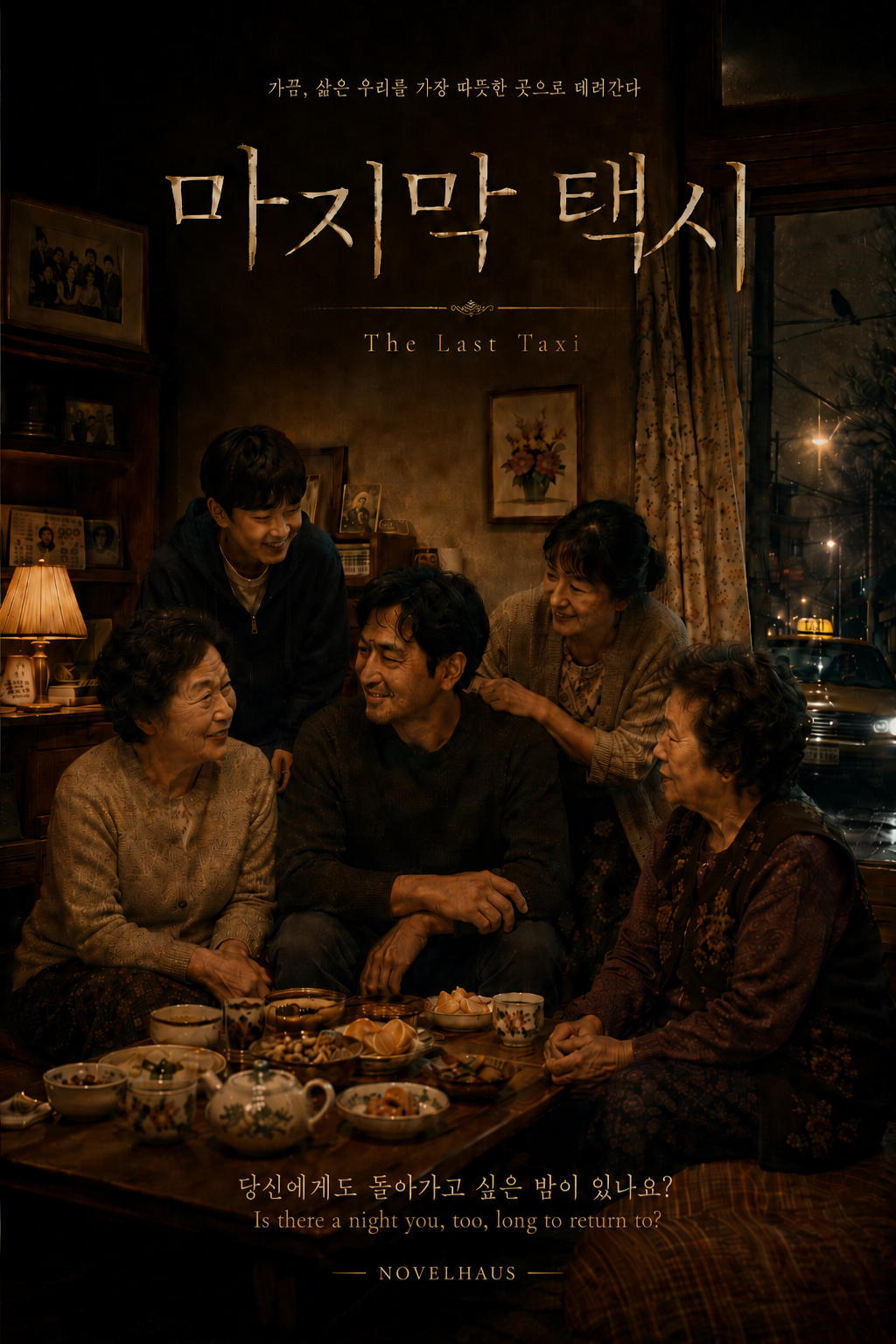
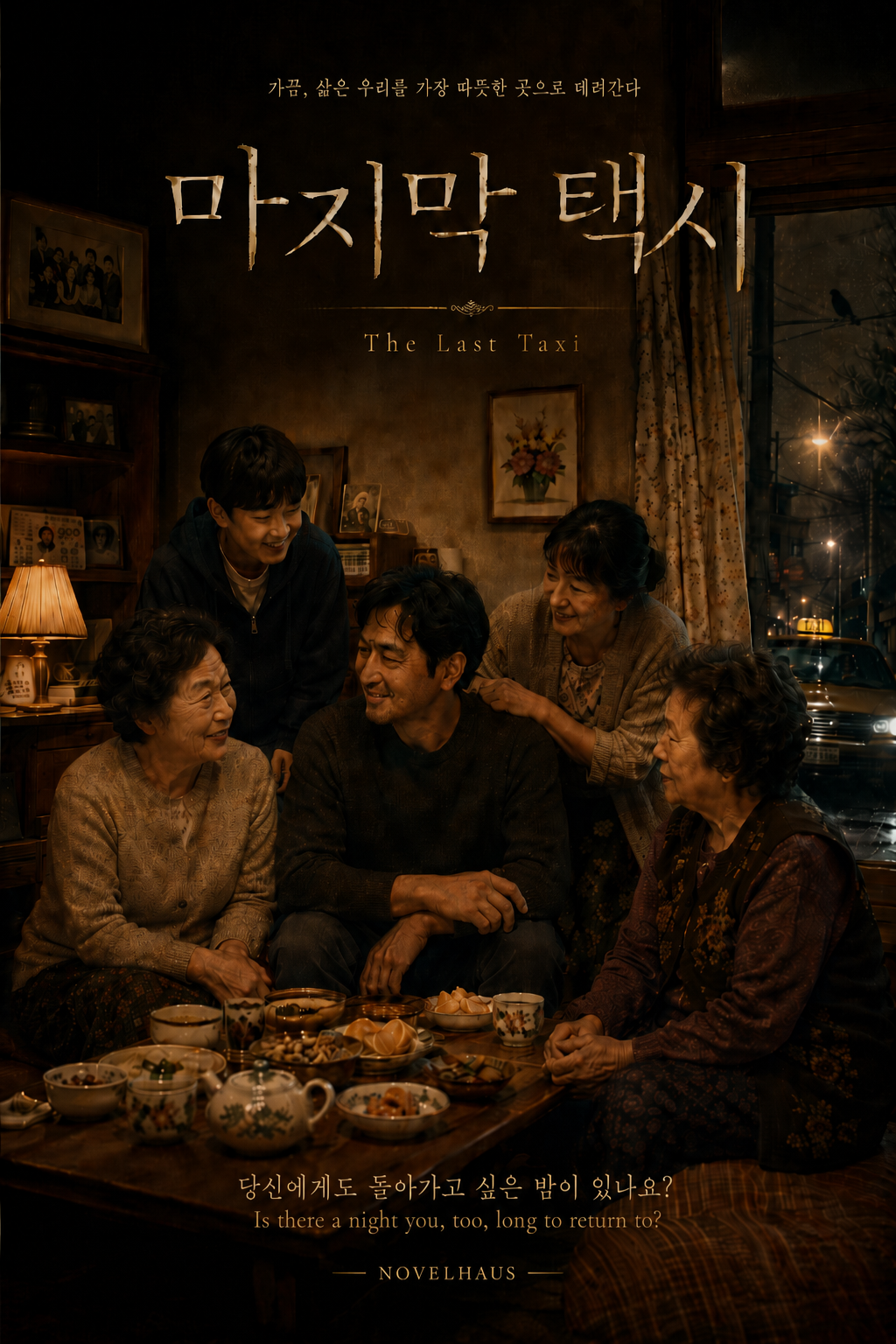
마지막 택시
죽은 가족들을 택시에 태워 보낸 밤, 한 남자는 자신의 등에 남은 피와 집 앞에서 기다리는 마지막 택시를 발견한다. 누군가를 보내야, 나도 다음 곳으로 갈 수 있다.
Solo Novel
Drama
Short
08/07/2026
The Last Taxi
One morning, Kim Do-hyun’s wife tells him about a disturbing dream.
A large black crow was perched on his back, its claws drawing blood. No matter how loudly she called to him, he kept walking forward as if he felt nothing.
That same night, Do-hyun has a strange dream of his own. He is taking a chemistry exam in an unfamiliar university classroom. When the exam ends, someone congratulates him:
“You’re a professor now.”
But when he returns home, the impossible is waiting for him.
His mother, his aunt, and his younger brother—all long dead—are sitting in the living room as if they had never left. Among them is another aunt who is still alive.
They eat, talk, and spend the evening together like an ordinary family gathering from many years ago.
When the night grows late, Do-hyun begins calling taxis to send them home, one by one.
Before leaving, his mother tells him:
“You don’t have to keep seeing us home anymore.”
And the aunt who is still alive looks at his back and asks:
“Why are you still carrying that?”
Do-hyun wakes before he can turn around.
But several days later, the boundary between dream and reality begins to disappear.
And one night, a taxi is waiting outside his house.
The driver says it has come for him.
Solo Novel
Drama
Short
07/15/2026
큰길 위의 어머니
돌아가신 어머니가 아흔여섯이 되어 흙길 위에 서 있었다.
새로 난 큰길, 아직 아무도 밟지 않은 그 흙길에서 아들은 세상을 떠난 어머니와 다시 만난다. 그리고 길 한가운데, 그가 평생 등에 지고 온 두려움이 커다란 구렁이가 되어 똬리를 틀고 있다. "네가 잡아야 해." 어머니의 조용한 말에, 아들은 무릎을 굽혀 그 아가리를 붙든다.
세우고 무너뜨리고 다시 세우기를 반복한 한 사람의 삶, 그를 끝내 지켜본 어머니의 사랑, 그리고 죽음 뒤에도 자식의 마음속에서 계속 나이 들어가는 모정을 그린 짧은 이야기. 아무도 밟지 않은 길 위에서, 우리는 무엇을 붙잡고 무엇을 놓아주어야 하는가.
Solo Novel
Drama
Short
07/15/2026
Mother on the Great Road
His mother, long dead, stood on the dirt road, ninety-six years old.
On a newly opened road no one had yet walked, a son meets his departed mother once more. And there, coiled in the middle of the path, is the fear he has carried on his back his whole life, grown into an enormous serpent. "You must take hold of it," she says quietly. The son bends his knees and seizes its jaws.
A short story of one man's life—built, collapsed, and built again—of the mother who watched over him to the end, and of a love that goes on aging inside a child's heart long after death. On a road no one has walked, what must we take hold of, and what must we let go?
Solo Novel
Drama
Long
06/14/2026
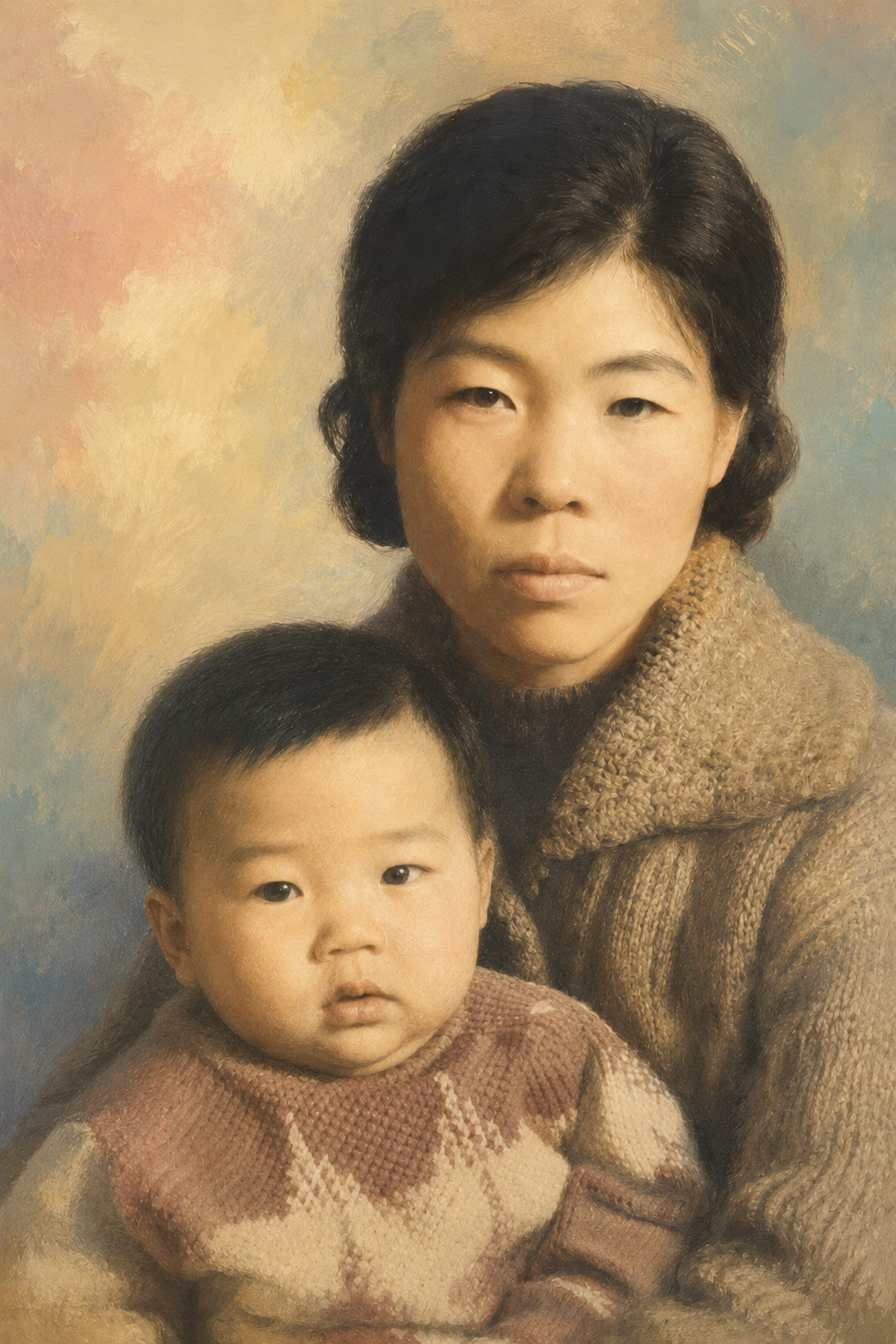
마더
1935년, 강릉 사천면의 비교적 넉넉한 지주 집안에서 태어난 규. 그러나 딸이라는 이유로 그녀에게 부유함은 특권이 되지 못했다. 학교도 서당도 허락되지 않은 채, 규는 글보다 먼저 노동을 배웠고 질문보다 먼저 침묵을 익혔다. 해 뜨기 전 마당을 쓸고, 논과 밭에서 하루를 보내며, 어린 나이에 이미 집안을 움직이는 일손이 되었다.
1950년 한국전쟁이 터지자, 규의 가족은 낮에는 산과 동굴에 숨어 지내고 밤이 되면 집으로 내려와 밥을 짓고 살림을 돌보았다. 총성과 굶주림, 납북과 약탈 속에서 규는 살아남는 법을 배운다. 전쟁은 끝났지만 그녀의 삶에서 생존은 끝나지 않았다.
젊은 규는 일본에서 돌아온 가난한 집안의 장남과 결혼한다. 대학을 나온 남편에게는 배움이 있었지만, 집안에는 열 명의 형제자매와 가난이 있었다. 규는 장남 며느리로서 또 다른 집안의 밥과 빨래, 동생들의 앞날까지 떠안는다. 남편이 서울에서 공무원이 된 뒤에도 규는 아이들을 시골에 맡기고 단칸방에서 시동생들을 먹여 살리며 하루하루를 견딘다.
두 딸과 두 아들을 낳은 규에게 자식은 자신의 끊어진 가능성을 다시 이어갈 유일한 길이었다. 특히 공부에 서툴고 장난이 많았던 큰아들에게 규는 남다른 집착과 희망을 품는다. 선생님이 인문계 중학교 진학을 만류해도 끝까지 설득하고, 없는 살림에도 과외를 보내며, 자신이 들어가 보지 못한 배움의 문 안으로 아들을 밀어 넣는다.
그러나 가족의 삶은 좀처럼 순탄해지지 않는다. 남편은 사업 실패로 집과 돈을 잃고, 가족은 더 작은 집으로 밀려난다. 물가가 폭등한 해에는 시장에서 버려질 배추와 고추를 사다가 겨울 김장을 담가야 했고, 키우던 강아지들마저 팔아야 했다. 아이들은 낡은 교복을 입고 자라고, 가난을 모른 채 뛰어놀던 큰아들은 중학생이 되면서 비로소 어머니의 한숨과 집안의 무거운 침묵을 알아가기 시작한다.
그럼에도 가족의 삶에는 작은 웃음이 있었다. 시장에서 토마토를 먹다가 엄마를 잃어버린 큰아들, 어린이날 공원에서 사라졌다가 먼 산 중턱에서 발견된 막내, 냉면에 고추냉이를 너무 많이 넣어 온 가족의 코가 뻥 뚫린 날, 텔레비전 채널을 두고 싸우다 기계를 망가뜨린 남매들. 고단한 현실 속에서도 가족은 밥을 먹고, 웃고, 다투고, 다시 함께 잠들었다.
큰아들은 어린 시절 그림에 재능을 보였지만, 선생님에게 자신이 그린 그림을 믿어주지 않는다는 말을 듣고 붓을 놓는다. 중학교 미술시간에는 잎 없는 나무를 그렸다고 혼이 나고, 고등학교 음악시간에는 이유도 모른 채 심한 폭력을 당한다. 밝고 호기심 많았던 아이는 점차 진지하고 무거운 청년으로 변해간다.
세월이 흘러 자식들은 각자의 길을 간다. 큰딸은 결혼하고, 큰아들은 대학과 군대를 거쳐 대기업에 취직한다. 막내아들은 미술과 패션을 공부하기 위해 일본으로 떠난다. 규는 자식들이 자기보다 넓은 세상으로 나아가는 모습을 보며, 비로소 고생의 끝이 조금씩 보이는 듯한 시간을 맞는다.
하지만 인생은 다시 무너진다.
큰아들은 회사를 나와 사업에 뛰어들었다가 사기와 보증 문제로 모든 재산을 잃는다. 막내아들은 혼자 장사를 이어가며 빚과 고립 속에 무너져간다. 규의 남편은 건강 악화와 치매 끝에 먼저 세상을 떠나고, 규 역시 노년에 치매를 앓기 시작한다.
강했던 규는 점점 어린아이처럼 변해간다. 길을 잃고, 기억을 잃고, 병원과 수술을 전전한다. 그럼에도 큰아들과 손을 잡고 동네를 산책하는 순간만큼은 평온하다. 봄이면 담장에 핀 장미를 바라보고, 집 앞 작은 텃밭의 상추를 살피고, 창문 앞에 밥을 기다리는 길고양이와 동해에서 데려온 강아지를 바라보며 조용히 웃는다.
코로나 시기, 규는 감염으로 병원에 입원한 뒤 끝내 집으로 돌아오지 못한다. 병원 침대에 묶인 채 쇠약해진 어머니 곁에서 큰아들은 마지막 사흘을 함께 보낸다. 어머니가 세상을 떠나기 전날, 큰아들과 막내아들은 함께 어머니의 기저귀를 갈아드린다. 평생 자식들의 몸을 씻기고 먹여 살렸던 어머니를, 이제 두 아들이 돌본다.
규는 그렇게 긴 생을 마친다.
그러나 가족의 비극은 끝나지 않는다. 규가 떠난 뒤 막내아들은 빚과 사업 실패, 고립 속에서 스스로 생을 마감한다. 남겨진 형제들은 슬픔을 추스를 틈도 없이 장례와 채무, 한정승인과 파산 절차를 처리해야 한다. 큰아들은 일본 졸업식에서 규와 아버지, 막내가 함께 찍은 오래된 사진을 바라보며, 이제 세상에 없는 세 사람을 떠올린다.
그럼에도 삶은 계속된다.
예순을 넘긴 큰아들은 어린 시절 접어두었던 꿈을 다시 꺼낸다. 한때 선생님의 의심과 폭력으로 멈추었던 그림과 음악의 감각은 완전히 사라지지 않았다. 그것은 웹 디자인과 플랫폼의 구조, 화면의 색과 여백, 사람들의 이야기가 흐르는 리듬 속에서 다시 살아난다.
AI의 도움을 받아 큰아들은 오랫동안 꿈꾸었던 플랫폼을 직접 만들기 시작한다. 여러 번 실패하고 다시 고치며, 바다 건너 미국에 법인까지 세운다. 그것은 성공의 선언이 아니라, 아직 살아 있기 때문에 다시 시작하는 행위다.
규는 평생 자신의 꿈을 말하지 못했다. 그러나 밥을 짓고, 집을 지키고, 자식들의 길을 열어주며 가능성을 다음 세대에 넘겼다. 그녀가 지킨 것은 단순한 생존이 아니었다. 언젠가 자식이 늦게라도 자기 삶을 시작할 수 있도록 남겨둔 시간이었다.
〈마더〉는 한 여성의 일생을 따라가며 일제강점기, 한국전쟁, 산업화, 도시화, 외환위기, 코로나와 AI 시대까지 이어진 한국 현대사의 가장 낮고도 단단한 자리를 비춘다.
이것은 영웅의 이야기가 아니다.
이름 없이 밥을 짓고, 자식을 키우고, 집을 지키며 시대를 버텨낸 한 어머니의 이야기다.
그리고 그녀의 삶이 끝난 뒤에도, 그 인내와 꿈이 다음 세대 안에서 다시 살아나는 이야기다.
Solo Novel
Drama
Long
06/08/2026
MOTHER
Born into a landowning family but denied education, protection, and comfort simply because she was a daughter, one Korean woman survives war, poverty, and a lifetime of sacrifice, quietly carrying the weight of modern history so her children may inherit the future she was never allowed to dream of.
In 1935, she was born into a landowning family in Sacheon-myeon, Gangneung, yet wealth was never once permitted to be part of her life. As the second daughter among five daughters and one son, she learned labor from her mother’s hands instead of protection, simply because she was a girl. Before sunrise, she swept the yard; even after sunset, the endless housework and farm work continued. Neither the village school nor formal education could ever belong to her. Unable to learn letters, the young girl instead learned how to read people’s moods, how to remain silent, and how to endure.
In 1950, when she was fifteen, the Korean War broke out. Her family, unable to flee, hid in the mountains during the day. In the cold dirt-floor darkness of a cave, she survived each day while barely daring to breathe. At night, when the gunfire and smoke had briefly subsided, she would return home to cook rice and take care of the household. Daytime meant hiding; nighttime meant survival. For nearly three years, she made that journey again and again, risking her life every day. More terrifying than hunger was the fear of being discovered, and deeper than sleep was the anxiety of never knowing when it would end. The girl’s youth quietly grew old inside that cave.
At the age of twenty-three, she married a man four years older than her, a university-educated refugee who had come from Japan. As the eldest son of ten siblings, her husband brought not stability but the beginning of yet another burden. He was educated, but the times were too harsh for learning alone to overcome poverty, and the couple’s life was constantly shaken by the struggle to make a living. She gave birth first to two daughters, then to two sons, raising them while living every day without rest. Her own life was always postponed as she placed her children’s meals and futures before her own.
Her love and investment in her eldest son, in particular, were almost relentless, as if they were a form of compensation for the education she had been denied all her life. In every book and every coin of tuition was not merely a mother’s ambition, but a desperate wish to continue, through the next generation, the possibilities that had been cut off in her own life. In this way, she lived by choosing her children’s future over her own name.
This novel follows the difficult life of one woman and casts light on the shadows of modern Korean history, from Japanese colonial rule, war, poverty, and industrialization to the threshold of the age of artificial intelligence. The life of a woman who endured in silence and quietly supported the next generation—her survival becomes one of the strongest testimonies of an era.